


 Chat on LINE






What is shock chlorine, and how do I use it?
Short answer
Shock chlorine, or shocking the pool, means adding a large dose of chlorine at once to lift free chlorine to about 10 ppm, enough to destroy the chloramines, bacteria and algae that everyday chlorine levels leave behind. Shock once a week and after heavy rain or a busy day: add it in the evening, run the filter for at least 12 hours, and wait until chlorine is back to 3 ppm or less before swimming.
Why pools need shocking
Sweat, sunscreen, urine and dirt from swimmers bind with chlorine into chloramines (combined chlorine). Chloramines disinfect poorly and cause the sharp 'chlorine' smell, stinging eyes and cloudy water. A shock lifts chlorine high enough to break them down. The strong smell people take for too much chlorine usually means there isn't enough free chlorine.
When to shock
- Once a week in normal use.
- After a busy day, such as a party or a long holiday weekend.
- After heavy rain or a storm.
- When the water is cloudy, smells strongly of chlorine or stings the eyes.
- When combined chlorine (total minus free chlorine) is above 0.4 ppm.
- After filling with new water, at the first sign of algae, or when the pool hasn't been used for a while.
How to shock a pool, step by step
- Step 1: Test pH and chlorineBring the pH to 7.2–7.6 first. If your strips read total chlorine, work out combined chlorine = total chlorine − free chlorine.
- Step 2: Wait for the eveningShock after sunset with nobody in the pool: sunlight destroys a lot of chlorine within hours.
- Step 3: Work out the dose from your pool sizeUse the table below. To clear a green pool, use the new-water rate for Shock Chlorine.
- Step 4: Skimmer basket or bucketPut Shock Chlorine tablets in the skimmer basket. Dissolve powders or granules in a bucket of water first, then pour around the pool near the return jets. Don't scatter them onto a liner or fibreglass floor.
- Step 5: Run the filter for at least 12 hoursLet the water circulate overnight, and take any robot cleaner out of the pool during the shock. Test chlorine again the next morning.
- Step 6: Wait for chlorine to drop before swimmingSwim when free chlorine is at 3 ppm or less. Shock and Swim is the exception: its label allows swimming half an hour after dosing.
Shock doses by pool size
| Pool volume | Shock Chlorine, routine every 2–3 days (20 g tablets) | Shock Chlorine, new water or green pool | Shock and Swim, weekly |
|---|---|---|---|
| 10 m³ (10,000 litres) | 2 tablets | 5 tablets | 83 g |
| 25 m³ (25,000 litres) | 5 tablets | 13 tablets | 210 g |
| 50 m³ (50,000 litres) | 10 tablets | 25 tablets | 415 g |
| 100 m³ (100,000 litres) | 20 tablets | 50 tablets | 835 g |
Shocking to 10 ppm with TCCA 90% takes about 11 g per m³, but adds about 6 ppm of cyanuric acid each time, so don't shock with TCCA every week. See what TCCA 90 is.
Approximate doses from the labels of Pool Pro&Lab products. Test the water before and after every shock.
Safety
- Never mix different chlorines, above all TCCA with calcium hypochlorite: it can heat up or catch fire.
- Always add the chemical to water, never water to the chemical.
- Wear gloves and eye protection, and keep children and pets out of the pool during a shock.
- If you overdose and need chlorine down fast, use Chlorine Neutraliser at 10 g per 10 m³ for each 1 ppm.
Frequently asked questions
How is shock chlorine different from normal chlorine?
More in how it is used than in what it is. Everyday chlorine holds 1–3 ppm; a shock is one large dose that lifts it to about 10 ppm. Shock products usually dissolve fast, and some add a non-chlorine oxidiser, as Shock and Swim does.
How often should I shock my pool?
Once a week for a typical home pool. Busy pools and the rainy season may need two shocks a week, or one whenever combined chlorine passes 0.4 ppm.
How soon can I swim after shocking?
When free chlorine is back to 3 ppm or less, usually the next morning. With Shock and Swim the label allows swimming 30 minutes after dosing.
Can I shock during the day?
You can, but it works less well because sunlight destroys chlorine fast, and nobody may be in the pool. Shocking in the evening gets more out of the chemical.
Why does the pool still smell of chlorine after shocking?
The smell comes from chloramines, so the shock didn't reach the level that breaks them all down. Shock again to lift free chlorine higher and keep the filter running.
Products in this guide
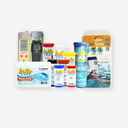
- Shock ChlorineView at PoolBestBuy
- Supreme SHOCK AND SWIMView at PoolBestBuy
- Insta-TEST® 5 PlusView at PoolBestBuy
- Supreme CHLORINE NEUTRALISERView at PoolBestBuy
Buy online from our partner store, PoolBestBuy